Compliance
Remote access by Spain’s labour inspectorate to the time record: what changes and how to prepare
Spain’s labour inspectorate can already turn up unannounced and require the record in a usable digital format. The draft would add remote, immediate access. What changes, what the text does not say and how to prepare your company.
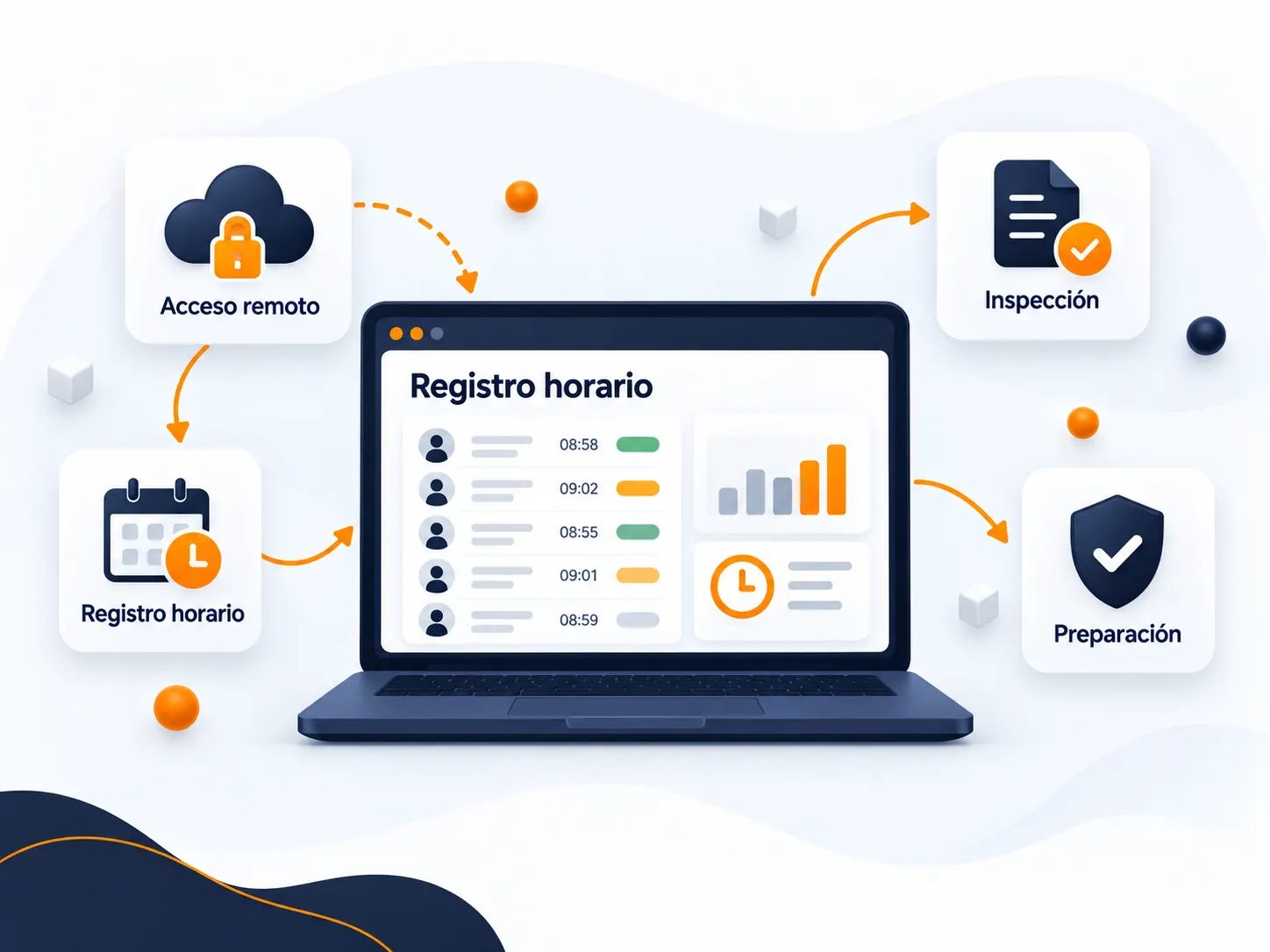
Will Spain’s labour inspectorate be able to check your time records remotely? That is what the draft royal decree on the working-time record proposes: each company’s system “must allow the Labour and Social Security Inspectorate access at any time and immediately, remotely and in person”. As of 29 September 2026 that text has not been published in the BOE, but the inspectorate already has more access to the record today than many companies realise.
This guide explains what the inspectorate can ask for today, what remote access would add, what the draft does not say (despite what circulates) and what is worth having ready now.
In short. Today inspectors can turn up unannounced, examine the record, including computer programs, and require that, if you keep it digitally, you hand it over in a processable, readable and compatible format. According to the Ministry of Labour, the record must be at the workplace or immediately accessible from it. The draft would add remote, immediate access and let the inspectorate carry out checks remotely. How that will work technically it does not say: it leaves that to later rules.
What the inspectorate can ask for today
Remote access would be new, but the starting point is already demanding. These powers are in force:
- Unannounced visits, at any time, to any workplace (art. 13.1 of Law 23/2015 on the Labour Inspectorate).
- Examining the record and any employment documentation, “including computer programs and files on magnetic media” (art. 13.3.c).
- Usable digital format: if the record is kept electronically, it must be supplied in that medium and “in a processable, readable format compatible with those in general use” when required (art. 13.3.c).
- Summons to appear with the documentation at the public office the inspector names (arts. 13.3.c and 21.1).
And the Workers’ Statute requires the record to remain available to the inspectorate (art. 34.9). The Ministry of Labour’s guide reads that phrase as follows:
“Records ‘shall remain available’ must be understood as being and remaining physically at the workplace, or being immediately accessible from it. This also prevents records from being created afterwards, manipulated or altered.” (our translation)
In other words, “I’ll send it next week” is not an acceptable answer even today.
What the draft royal decree would add
The draft royal decree the Ministry put to public hearing on 9 October 2025 devotes article 6 to access to the record, and a final provision to the inspectorate’s powers:
- Inspectorate access (art. 6.3): “at any time and immediately, remotely and in person at the workplace”.
- Remote checks (second final provision): it amends the inspectorate’s regulation so inspectors can carry out any investigation, examination or evidence-gathering step “in person or remotely”.
- Format (art. 6.4): the information and its copies in a “processable, readable format compatible with formats and systems in general use”.
- Each employee’s access (art. 6.1): to consult and obtain a copy of their own entries and any changes at any time and immediately, at least at their workplace, and to receive the period’s summary with their payslip.
- Legal representatives’ access (art. 6.2): to consult and copy all entries on the spot, but with data minimised and expressly excluding ID number, home address and marital status.
On top of that come the rules that make this access meaningful: records kept by digital means (art. 2.1), every change with a clear trace of who made it (art. 2.2.b) and retention for four years (art. 4.f). Remember it is a draft: the Council of State issued an unfavourable opinion on 23 March 2026, with objections that included data protection, and the final text may change.
What the draft does not say
Several claims about remote access circulate that the text does not contain. It is worth separating them:
- It does not say how the connection will work. Not a link, not a read-only user, not a submission through an e-office. Article 5 leaves the technical requirements to implementing rules that do not yet exist.
- It does not require a specific or certified program. A company could follow whatever technical requirements are approved or choose another system that meets the decree’s principles, backed by a report from a qualified technician justifying it (arts. 5.1 and 5.2).
- It does not change the fines. Penalties are set by law, not by royal decree. We explain them in how much the fines for not keeping a time record are.
- It has no date. The public hearing text provides for entry into force twenty days after publication in the BOE, and that publication has not happened.
What happens if you do not provide the record
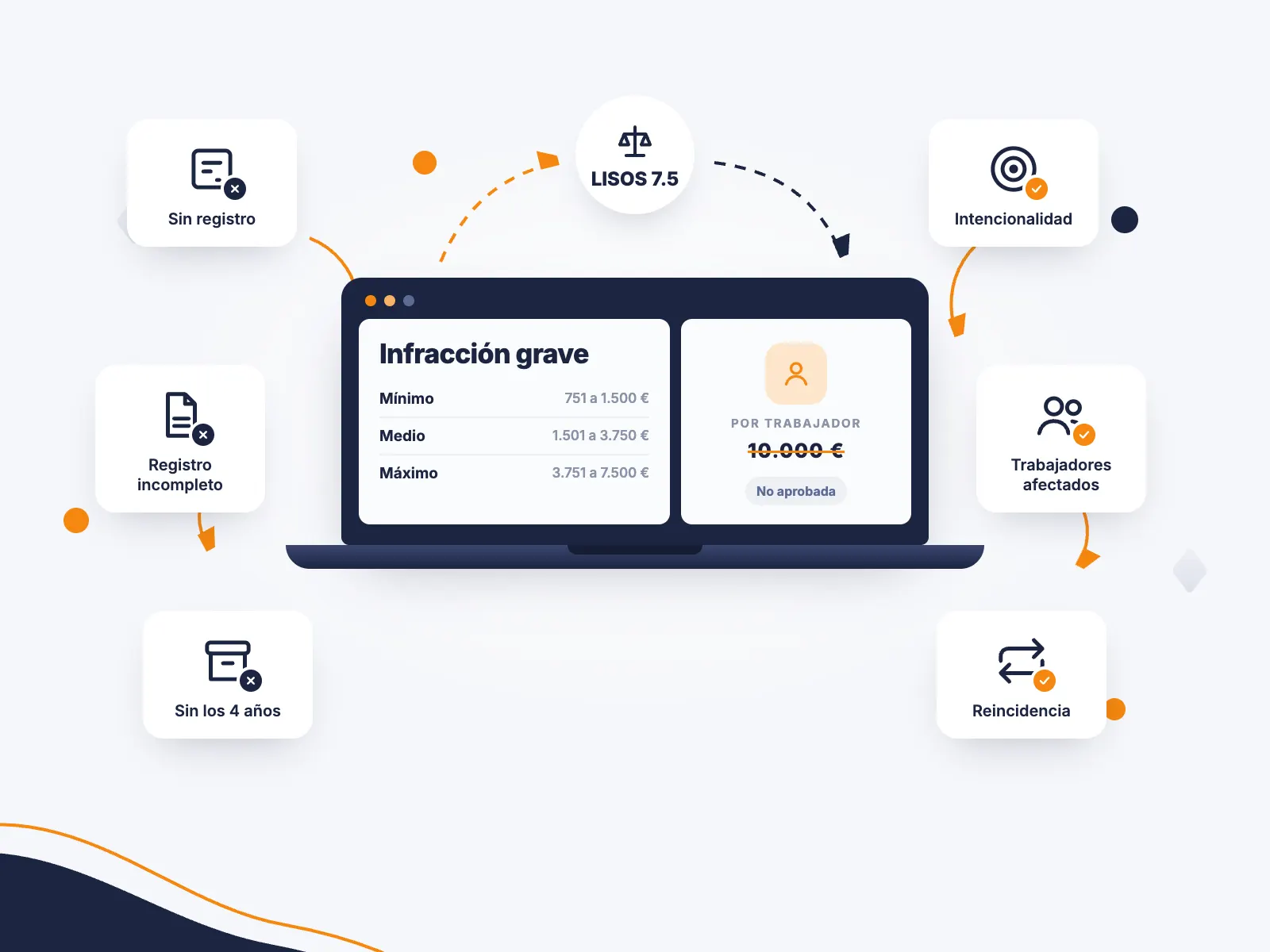
Having no record, or one that is not reliable, is a serious infringement under article 7.5 of the LISOS, €751 to €7,500. But when what fails is cooperation with the inspectorate, the obstruction rules also apply (art. 50 of the LISOS):
- Acts or omissions that disrupt, delay or prevent the inspector’s work are serious obstruction, €751 to €7,500.
- A mere delay in providing information can be minor, except when it is requested during a visit and concerns documents that must be kept at the workplace. According to the Ministry’s guide, the working-time record is one of them.
- Preventing inspectors from entering or remaining on the premises is very serious, from €7,501.
How to prepare your company now
None of this requires waiting for the BOE. Under today’s rules, the question to ask is: if a requirement arrives at ten tomorrow morning, how long does it take me to hand it over?
- Export in minutes, filtered by person, department and period. If gathering one month takes a morning, the record is not “immediately accessible”.
- Standard format: PDF to hand over, spreadsheet or CSV to analyse. A proprietary format only your program opens is not “compatible with those in general use”.
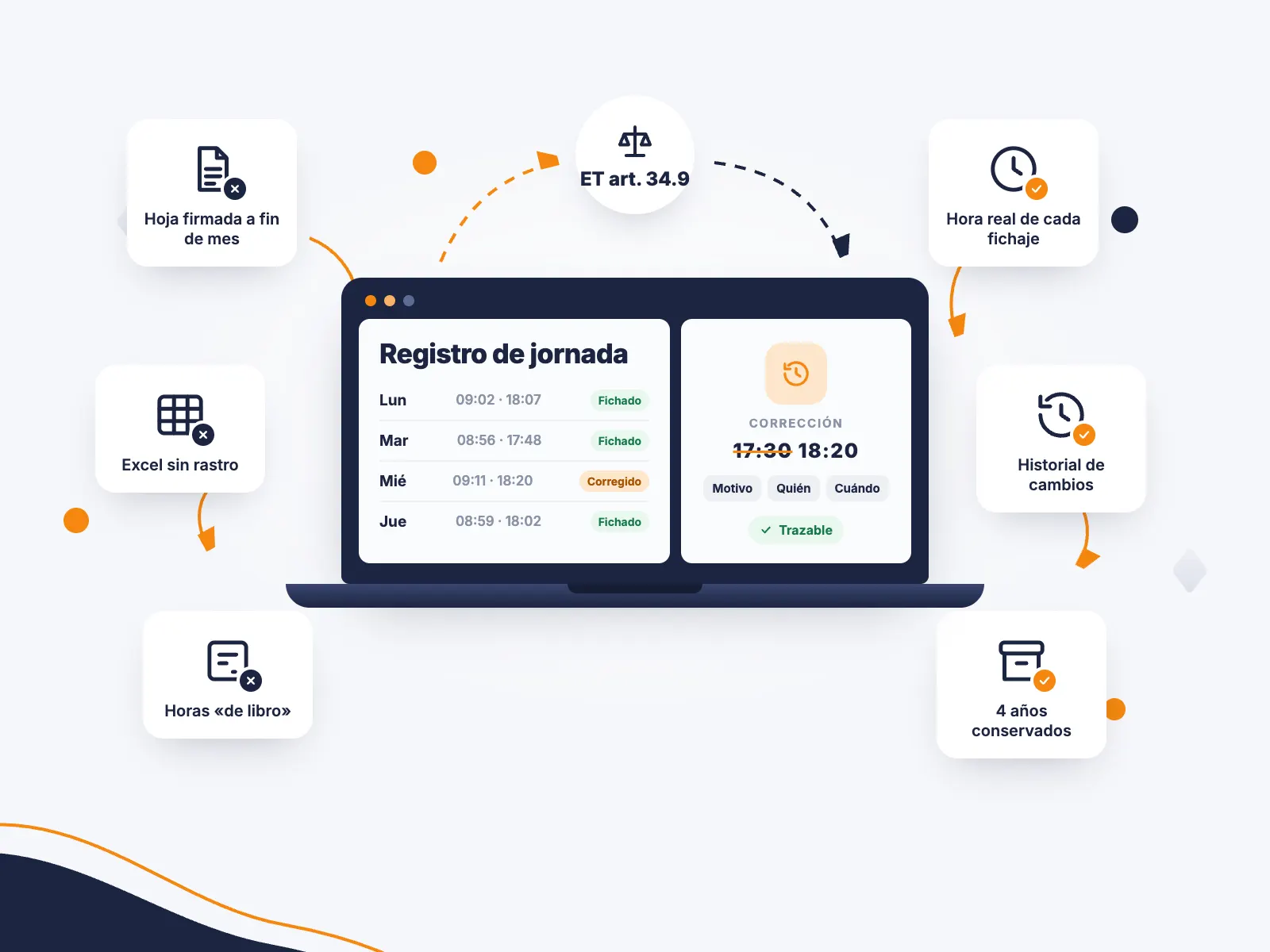
- Visible change history: what was corrected, by whom, when and why. It is the first thing checked when the hours do not add up.
- A named person who knows how to pull the record and whom reception alerts if the inspectorate arrives.
- Each employee’s access to their own data, without having to request it by email.
- Minimised copies for legal representatives, without data they do not need for their role.
- Four years to hand, including people who have left the company.
How Quantummycos handles it
With Quantummycos the working-time record is in the cloud and can be consulted from anywhere, including the workplace, which is what the Ministry asks for today. The report is filtered by person, department and period and exported as a PDF to hand over (per person and month, with the corrections annex and signature boxes) or as Excel for working with the data. What you see on screen is exactly what gets exported.
Every correction stays in the clock-in’s history with what it was before, what it is now, who made it, when and why. Each person sees their own clock-ins on the web and in the app, including any corrections the company made. And people who leave are archived rather than deleted, so their record stays retrievable for the four years.
You can see how time tracking works or open the app and try it with your team.
Keep reading
- Spain’s working-time record: what is mandatory today and where the royal decree stands, with the full timeline.
- Fines for not keeping a working-time record in Spain in 2026, with the amounts and how they are graded.
- Are paper or spreadsheet time records legal in Spain in 2026?, what is valid today and what would stop being valid.
- Labour inspectorate, in the HR dictionary, what it is and what it can do.
Sources
- Draft royal decree on the working-time record, public hearing text (Ministry of Labour, October 2025, in Spanish), articles 2, 4, 5 and 6 and second and fifth final provisions.
- Law 23/2015 on the Labour and Social Security Inspectorate (BOE, in Spanish), articles 13 and 21.
- Guide on the working-time record (Ministry of Labour, in Spanish).
- Royal Legislative Decree 2/2015, consolidated Workers’ Statute (BOE, in Spanish), article 34.9.
- Royal Legislative Decree 5/2000, Law on Social Order Infringements and Penalties (BOE, in Spanish), articles 7.5, 40 and 50.
This article is for information only and is not legal advice. The digital time-record legislation is still in progress and the final text may change: always check the BOE and consult your employment adviser. Last reviewed: 29 September 2026.
- Working-time record
- Compliance
- Employment law
- Time tracking
Frequently asked questions
Today it can require the record in a usable digital format and summon the company with the documentation. Remote, immediate access to the system is a proposal in article 6.3 of the draft royal decree on the working-time record, which as of 29 September 2026 has not been published in the BOE.
The draft does not say. Article 5 leaves the technical requirements to later implementing rules and allows another system that meets the decree’s principles, backed by a technical report justifying it.
According to the Ministry of Labour’s guide, the record must be physically at the workplace or immediately accessible from it. A digital record that can be consulted on the spot from the workplace fits that reading.
Having no record, or an unreliable one, is a serious infringement under article 7.5 of the LISOS, €751 to €7,500. On top of that, delaying or preventing the inspector’s work is obstruction: serious in general and very serious, from €7,501, if entry is prevented.
The draft expressly excludes it: their access must minimise data and leave out ID numbers, home addresses and marital status.
Yes. The law already requires the record to be available to employees, and the draft specifies that they can consult and copy their own entries and any changes at any time and immediately, and receive the summary with their payslip.