People management
The hidden cost of absenteeism in Spain: what the data says and how to reduce it
A cost that appears on no invoice and may still be draining your profitability. The data, the indirect costs nobody accounts for, and the levers that actually move the needle.
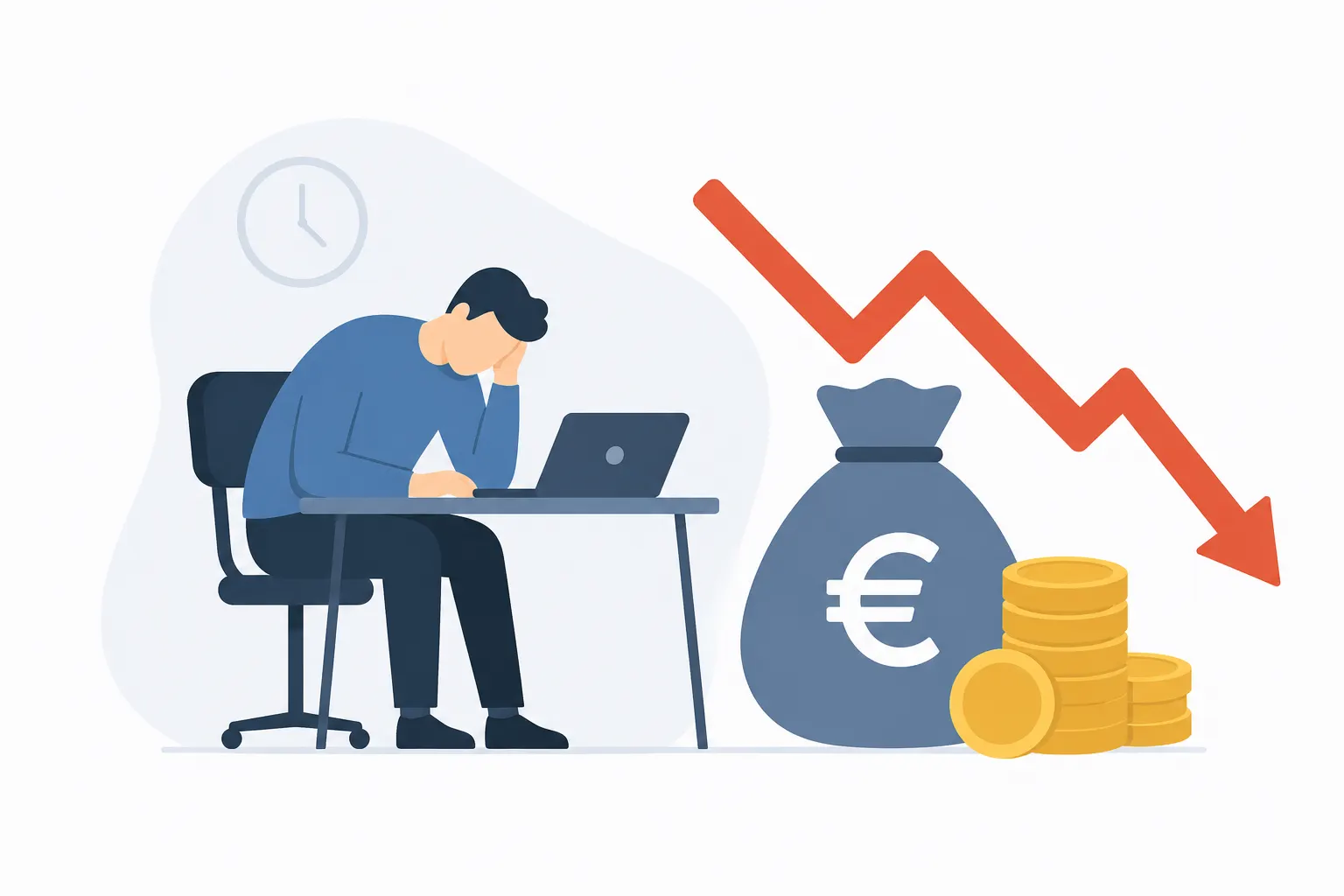
There is a cost that appears on no invoice, that you negotiate with no supplier, and that may still be draining a significant share of your company’s profitability: workplace absenteeism. And the latest figures do not invite optimism.
Spain closed 2025 with an absence rate of 7.1% of contracted hours, an all-time high, matching the record set in the first quarter of 2022. Translated into people: close to 1.6 million employees are away from their post on any given day. This is not a blip, it is a structural trend that has been building for years.
This article breaks down what is really behind that figure, what it actually costs, and above all what you can do to reduce it.
First, what exactly is absenteeism?
The absence rate measures the percentage of working hours lost against total contracted hours. It is the indicator used by the INE (through the Quarterly Labour Cost Survey), Randstad Research, Adecco and Spain’s General Council of Economists to size the phenomenon.
It is worth separating two components:
- Absence through temporary incapacity (IT): certified sick leave. At the close of 2025 this accounted for 5.5% of contracted hours, the bulk of the total.
- All other absence: time off not linked to sick leave (statutory leave, lateness, unjustified absence and so on).
One thing is worth stating from the outset: absenteeism is not the same as idleness. The overwhelming majority is genuine medical leave. Which is why reducing it is not a matter of pressuring your workforce, but of managing the causes and the process better.
The hidden cost: much more than the hour not worked
This is the heart of it. When an employee is absent, the cost is not only their salary for that day. There is a layer of indirect costs that is rarely accounted for, and that is where the real impact sits.
According to data compiled by the research service of Spain’s General Council of Economists (drawing on sources including Adecco, Cepyme and the mutual insurers), absenteeism cost Spanish companies a direct total of more than €12,245 million in 2023 alone. But the knock-on effect goes much further:
- Direct cost: hours paid and not worked.
- Cover cost: hiring, training and bringing replacement staff up to speed. Cover is never immediate and never perfect.
- Lost productivity: projects that slip, workload peaks that land on the rest of the team, services that go undelivered.
- Intangible cost: overload on the people who are present, a deteriorating climate and, over time, more attrition and more sick leave. Badly managed, absence feeds itself.
That last dimension is the dangerous one: every uncovered absence pushes onto the rest of the team, and an overloaded team generates new absences.
Why does it keep growing?
The sustained growth of absenteeism in Spain comes from a combination of factors:
- Demographic: an older working population tends towards more long-term sick leave.
- Organisational: rigid working models, a lack of flexibility and a disconnect between managers and their teams.
- Health-related: the growing weight of mental health and psychosocial risk, which companies are still only beginning to manage.
- Measurement: many companies still do not track their absence systematically, so they cannot act on what they cannot see.
Not every sector suffers equally
One of the most useful conclusions in the reports is the sheer dispersion across sectors. In the latest analysis, the ten sectors with the highest absence exceed 9%, with some above 12%, while at the other end there are activities below 3.5%. Sectors such as legal and accounting services, or employment-related activities, sit around 3%, while construction, despite starting from low levels, shows a rising trend.
There are territorial differences too: regions such as the Basque Country and the Canary Islands record rates above the national average.
The lesson for your company is clear: the benchmark matters. Comparing your rate against your sector tells you whether you have a real problem or whether you are within the expected range.
Six levers to reduce absence (without pressuring your team)
Reducing absenteeism is possible, but not through isolated control measures. These are the levers that actually move the needle:
1. Measure it properly. You cannot manage what you do not measure. You need your rate, its monthly trend, by department and by cause. This is where most companies fail: they work on impressions, not data.
2. Spot patterns early. Do absences cluster on Mondays? In one particular team? After a change of manager? Patterns reveal structural causes you can fix.
3. Add flexibility where you can. Flexible hours, partial remote work and genuine work–life balance reduce avoidable absence. Sometimes taking a day off is the only way an employee can resolve a personal matter.
4. Look after health, including mental health. Health surveillance, psychosocial risk assessment and an open channel to talk about workload prevent sick leave before it happens.
5. Strengthen the manager–team relationship. Regular one-to-ones surface signs of disengagement or exhaustion before they turn into leave.
6. Streamline how absence is handled. A clear request and approval process, with visible calendars and planned cover, reduces the chaos and the extra cost when an absence is unavoidable.
The role of data: from reacting to anticipating
The difference between a company that suffers absenteeism and one that controls it is almost always the same: data. The first finds out it has a problem when half the team is already missing; the second sees the trend rising and acts.
At Quantummycos we centralise leave management in a single clear calendar: requests and approvals in one click, available days without manual arithmetic and, above all, an overview that lets you see patterns by team and period. Combined with time tracking and team follow-up, you stop reacting to absence and start anticipating it.
Because in the end, reducing absenteeism is not about monitoring more, it is about understanding better what is happening in your workforce.
Do you know your company’s actual absence rate this month? If the answer is "not exactly", that may be the first thing to fix. Book a demo and we will show you how to have it all in view.
Sources for the figures cited: Randstad Research Absenteeism Report (close of 2025) and the research service of Spain’s General Council of Economists (cost data for 2023). Figures may be revised with each quarterly report. This article is informational.
- Absenteeism
- Absences
- Productivity
- HR
Frequently asked questions
It measures the percentage of working hours lost against total contracted hours. It combines absence through temporary incapacity (certified sick leave) and all other absence. Spain closed 2025 at 7.1%, of which 5.5% was temporary incapacity.
According to the research service of Spain's General Council of Economists, the direct cost exceeded 12,245 million euros in 2023. On top of that come cover costs, lost productivity and the intangible cost of overloading the people who are present.
By measuring it per department and per cause, spotting patterns early, adding flexibility where possible, looking after physical and mental health, strengthening one-to-one meetings between managers and teams, and streamlining how absence is requested and covered.