Software
What time-tracking software is in Spain (and why you need it)
It records the working day automatically and reliably, with no spreadsheets an inspector can question. What it is, how it works, and what separates a good system from one that will not protect you.
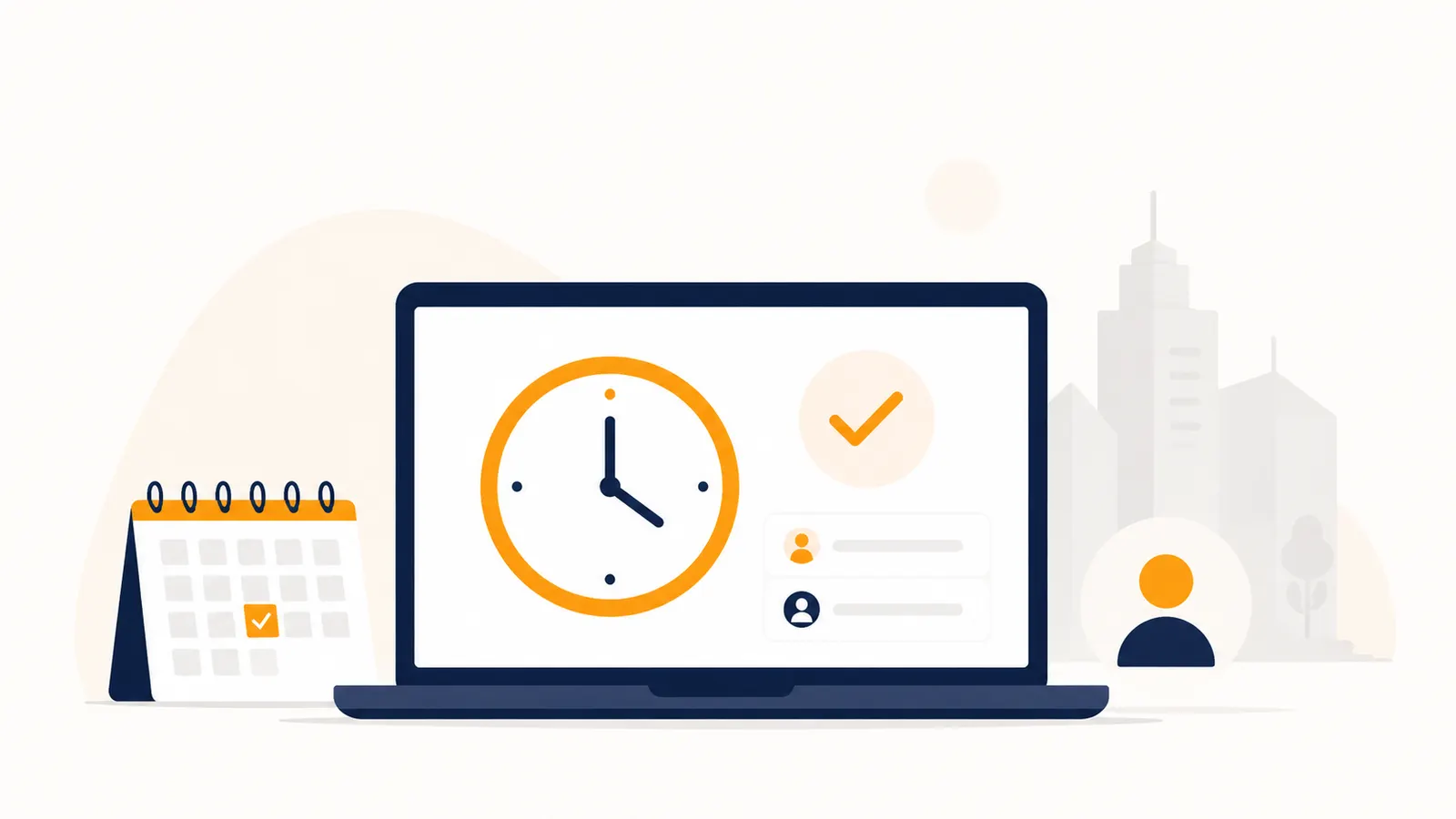
Time-tracking software is a digital tool that records each employee’s working day automatically and reliably: what time they start, when they take a break and when they finish. In Spain this is not a technological luxury, it is the simplest way to comply with a legal obligation that affects every company, without paperwork or spreadsheets an inspector can question.
If you still handle clock-ins with a signed sheet or a shared spreadsheet, this article is for you. We will look at what this kind of software actually is, how it works, and why it saves you time, errors and legal trouble.
What time-tracking software is
Time-tracking software replaces the manual recording of the working day with a digital system. Instead of writing hours down by hand, each person clocks in through an application (on a phone, a computer or a terminal) and the system automatically stores every entry and exit with its exact date and time.
Unlike a spreadsheet, good software cannot be manipulated without leaving a trace: every change is recorded. That traceability is precisely what separates a "reliable" record (valid in the eyes of the law) from one that is not.
How clocking in works
It is simpler than it sounds. In practice, time-tracking software does four things:
- It records the entry. The employee marks their start, their breaks and their finish with one click, from wherever they are. That covers both on-site work and remote work.
- It stores the data securely. Each record is encrypted and kept for as long as the law requires, protected in line with the GDPR.
- It calculates automatically. It adds up hours worked, flags overtime and deducts breaks, without anyone doing arithmetic.
- It generates reports. A couple of clicks produce records ready to present to an inspector or to use for your own attendance management.
The result: what used to be hours of administration and manual error becomes an automatic, audit-proof process.
Why it is mandatory in Spain: the working-time record
Here is the underlying reason. Since 2019, Spanish employment law has required every company, regardless of size or sector, to record each employee’s working day daily and to keep those records for four years.
The problem is that paper and spreadsheets are easy to manipulate, and the labour inspectorate accepts them less and less as a reliable record. Failing to keep a valid record is a serious infringement that can lead to fines of up to €7,500. And the legal framework is tightening: the working-time record is moving towards a model that is digital-only, traceable and accessible in real time to inspectors. We cover this in detail in our article on the mandatory digital working-time record in 2026.
The conclusion is simple: digitalising time control is not preparing for the future, it is complying with an obligation that already exists today.
What separates good time-tracking software from the rest
Not all systems are worth the same. These are the elements that genuinely matter:
- Traceability and immutability. An immutable change history. Without it, the record is not legally reliable.
- Clocking in from anywhere. Mobile and desktop, to cover remote and field work, not just a fixed terminal.
- Breaks and overtime recorded. Start and end are not enough: the rules ask for more detail.
- A connection to leave. Keeping time tracking and holiday and sick-leave management in the same place avoids mismatches.
- GDPR compliance. Personal data protected, with controlled access.
- One-click reports. So that an inspection does not turn into a treasure hunt.
Benefits for the company (beyond complying with the law)
Compliance is the starting point, but time-tracking software brings rather more than that:
- Less administrative load. No more chasing clock-ins or reconciling hours by hand.
- Reliable data for decisions. Overtime, absence and costs in plain view, so you manage on real information instead of instinct.
- Better attendance management. You know at any moment who is in, who is out and why.
- Peace of mind in an inspection. Everything recorded, retained and ready to show.
What does it cost? The myth of expensive software
Plenty of small companies put off digitalising because they assume time-tracking software is expensive. That is no longer the case. There is now affordable clock-in software, including free options for small teams, that meets every legal requirement. The cost of not having a reliable system (a fine of up to €7,500) is vastly higher than the cost of putting one in.
If you are comparing options, our guide to HR software for SMEs in Spain may help.
Quantummycos: time tracking that is simple and compliant
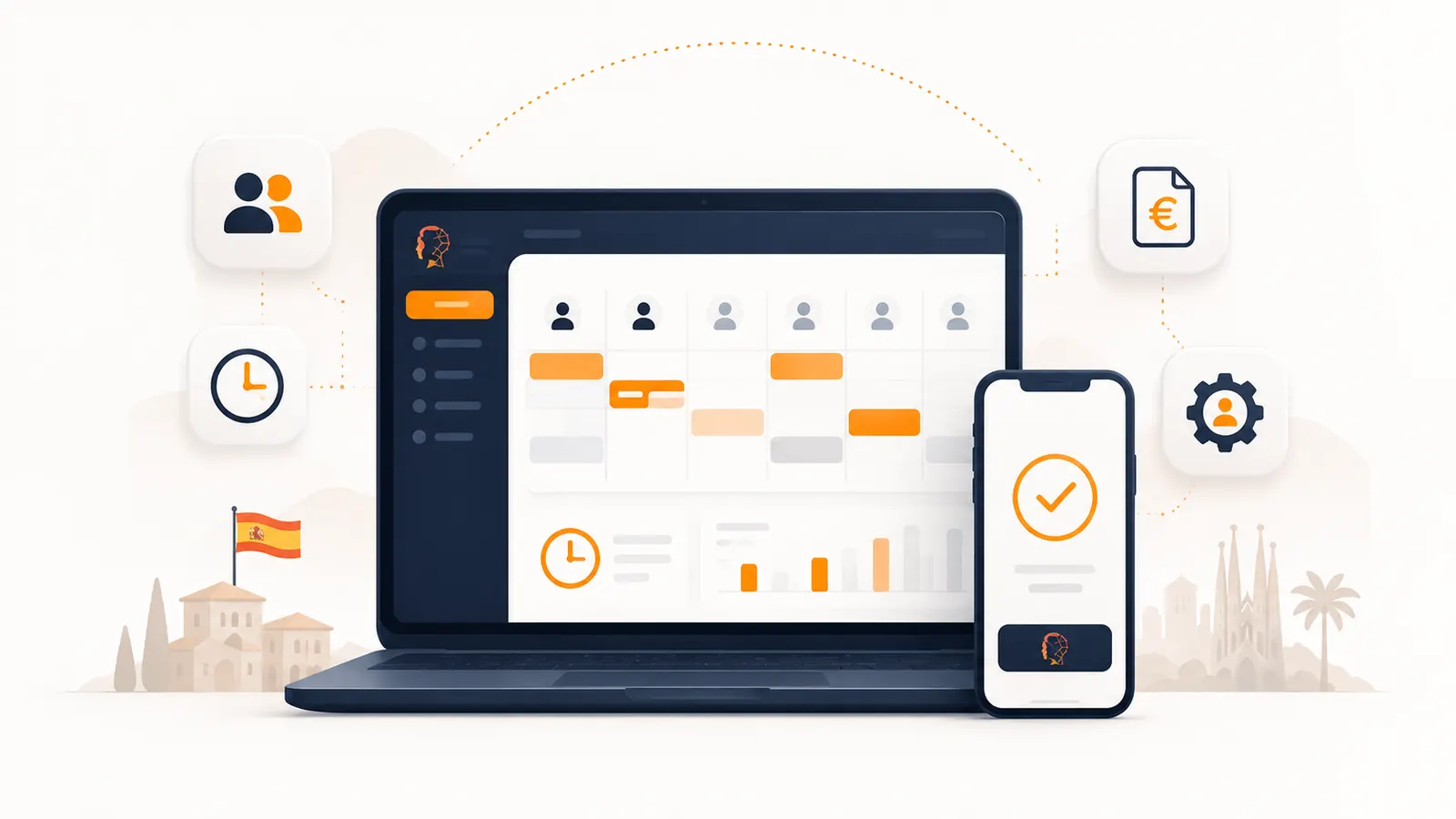
At Quantummycos, time tracking is the heart of the platform. Your team clocks in from a phone or a computer, every shift is recorded to the second with a traceable history, and the data is stored securely in line with the GDPR. You comply with the working-time record without paperwork and without chasing anyone, and you have it connected to leave, performance reviews and your team analytics.
At a price built for small companies: you can start for free and scale when you need to.
Ready to leave the spreadsheet behind? Book a demo or start for free and have your time tracking resolved this week.
Sources
- Royal Decree-Law 8/2019, of 8 March (BOE): the working-time record obligation.
- Guide to the working-time record, Spanish Ministry of Labour (MITES).
- Statistical framework for working time and hours worked: Spanish National Statistics Institute (INE).
This article is informational and does not constitute legal advice. Spain’s working-time rules may change; always check the current official position in the BOE.
- clock-in control
- attendance management
- Spanish employment law
- working-time record
- time tracking software
- affordable clock-in software
Frequently asked questions
It is a digital tool that automatically records each employee's working day: entry, breaks and exit, with exact date and time. Unlike a spreadsheet it cannot be manipulated without leaving a trace, and that traceability is what makes the record legally valid.
Yes. Since 2019 every company, regardless of size or sector, must record each employee's working day daily and keep those records for four years. Failing to keep a valid record is a serious infringement with fines of up to 7,500 euros.
There are free options for small teams and plans from 1.99 euros per user and month that meet every legal requirement. The cost of not having a reliable system is far higher than the cost of putting one in.